
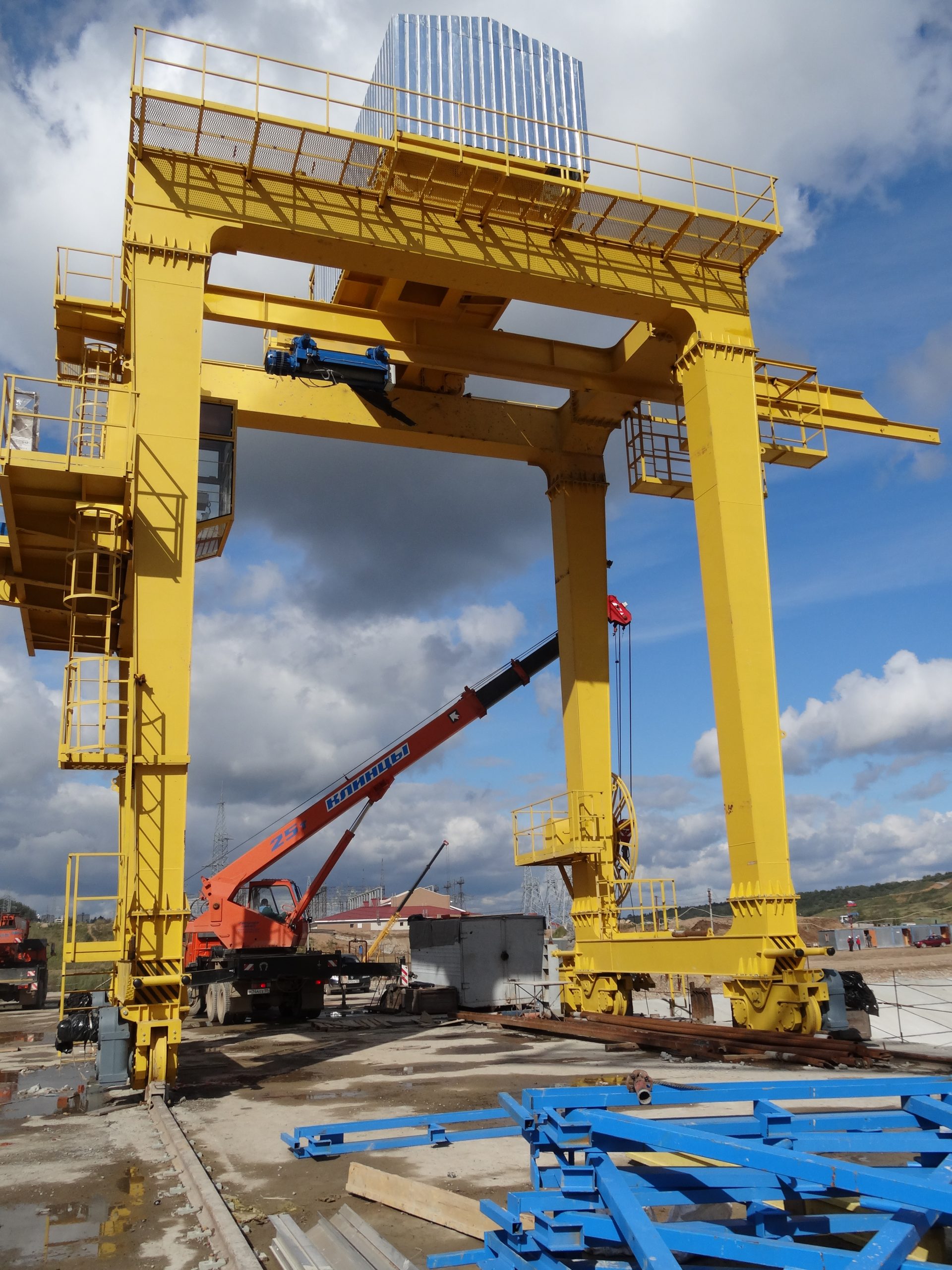
The need to diagnose an overhead crane or other lifting equipment usually arises in two situations.
The first is when it becomes necessary to carry out:
- technical inspection;
- expert examination;
- extension of service life;
- commissioning of the crane after repair, modernization or long-term shutdown.
Including:
- full inspection;
- partial inspection;
- scheduled inspection;
- or unscheduled technical inspection.
The second situation is when a real technical problem already exists, but it is unclear:
- what exactly is happening with the crane;
- how dangerous the situation is;
- and what should be done about it.
In most cases, the need for diagnostics arises when:
- mechanisms begin operating unstably;
- jerking, skewing or impacts appear;
- the crane starts drifting sideways;
- lifting operation becomes unstable;
- accelerated wear of wheels or bearings appears;
- electrical equipment has been repeatedly repaired or modified;
- or the crane has been operated for years without proper systematic assessment of its actual technical condition.
In many cases, the problem is not even the defect itself.
The main problem is that nobody clearly understands:
- the actual technical condition of the crane;
- whether it can continue operating safely;
- whether it will pass the next technical inspection;
- and what technical problems may develop in the near future.
By this stage, the crane has usually:
- been operating for many years without proper systematic diagnostics;
- undergone multiple repairs;
- been partially modified;
- had changes introduced into the control system;
- or simply remained in operation far longer than originally planned.
During diagnostics, it is very often discovered that the real cause of the problem is completely different from the area that had been unsuccessfully repaired for years.
Diagnostics may also be required before a crane is transferred for rental and at the time of its retuned. If the technical condition of the crane was not documented at the time of transfer, a situation may arise where unfounded claims and demands for repair are made when the crane is returned.
In such cases, it is difficult, but still possible, based jn objective evidence, to determine:
- which defects existed earlier;
- what appeared during operation;
- what components are already in critical condition;
- and who is actually responsible for the technical condition of the equipment.
We have carried out inspections of cranes that had not been operated for extended periods of time. Technical documentation and reliable information about these cranes were unavailable. The cranes had been partially or completely stripped of equipment, with components and devices missing. Based on the diagnostics of the crane structures and mechanisms, as well as the inspection of the runway supporting structure and foundations, the manufacturer, actual technical characteristics, and approximate period of manufacture of the cranes were identified. Repair documentation was developed, the cranes were re-equipped and restored, calculations of the load-bearing capacity of the foundations and runway supporting structure were performed, and project documentation was prepared. Crane passports were restored, and technical support was provided during their inspection and commissioning.
Examples of overhead crane diagnostics, identified defects and technical solutions for similar situations can be found in completed projects.
For example:
- bridge skewing may be caused not by the wheels, but by the condition of the crane runway;
- unstable lifting operation may be related not to the motor, but to the control system;
- constant bearing failure may be caused by electric current passing through wheels and bearing assemblies.
The main purpose of diagnostics is not simply to create a list of defects.
The main objective is to understand:
- what is actually happening with the crane;
- how dangerous the situation is;
- what must be done immediately;
- what can still continue operating safely;
- and what scope of work is actually necessary.
Based on the diagnostic results, the following are prepared:
- technical conclusion;
- list of critical defects;
- repair recommendations;
- modernization recommendations;
- recommendations for further safe crane operation.
The result of diagnostics is not formal remarks, but practical technical recommendations regarding:
- what must be done immediately;
- what can be postponed;
- what scope of work is actually required;
- and how the crane can be brought to a safe and predictable technical condition.
The main objective is not simply to identify defects, but to ensure the possibility of further safe and predictable crane operation for the required period of time.
Technical assistance and engineering support are also provided during official expert procedures related to:
- technical inspection;
- expert examination;
- commissioning of cranes;
- and preparation of the required technical documentation.
If previously issued technical recommendations are properly implemented, a predictable result of official expert procedures can be achieved.
Technical Diagnostics of a 10 t Overhead Crane
Engineering Measures for Restoration of a 10 t Overhead Crane